

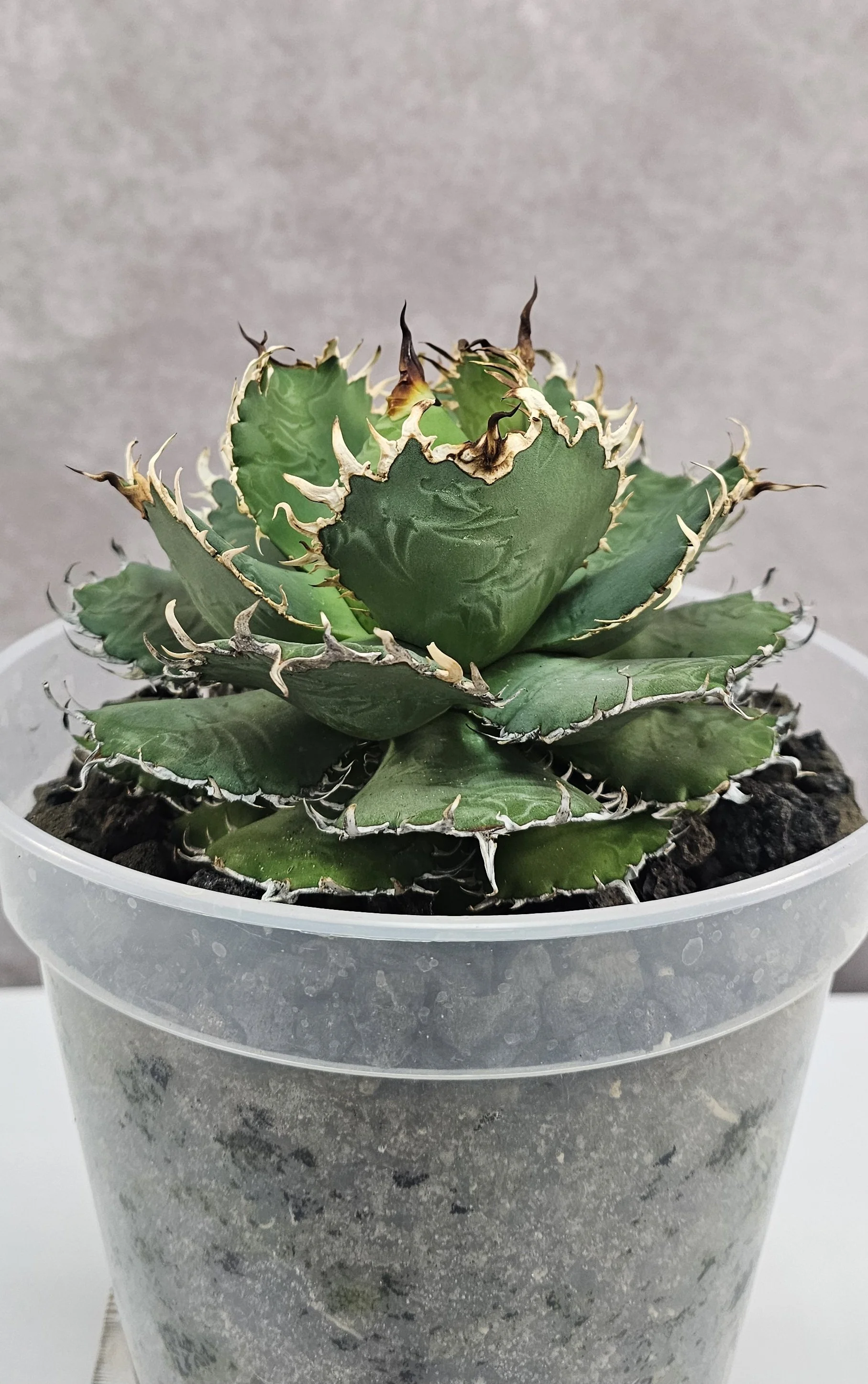
 Image 1 of 6
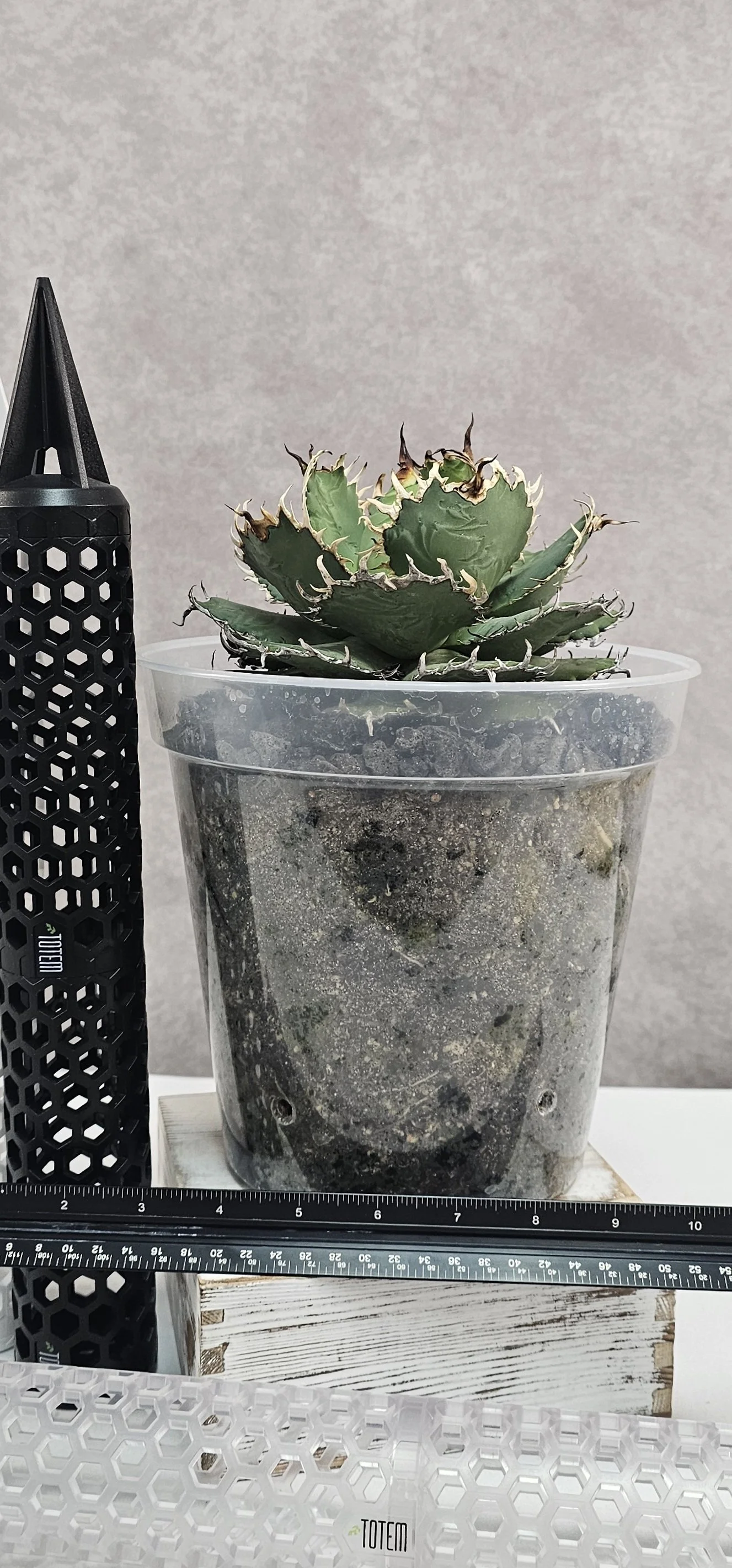 Image 2 of 6
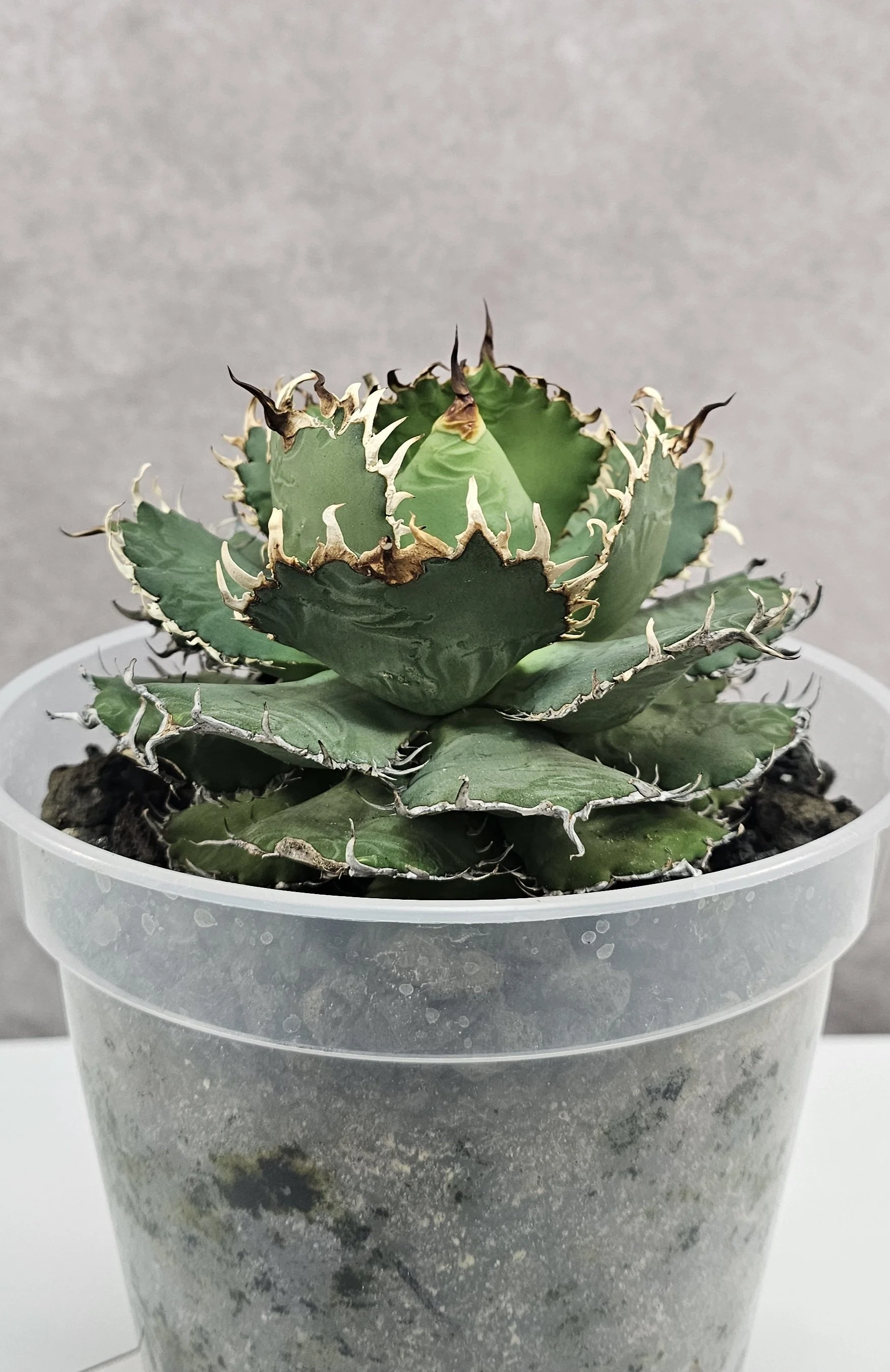 Image 3 of 6
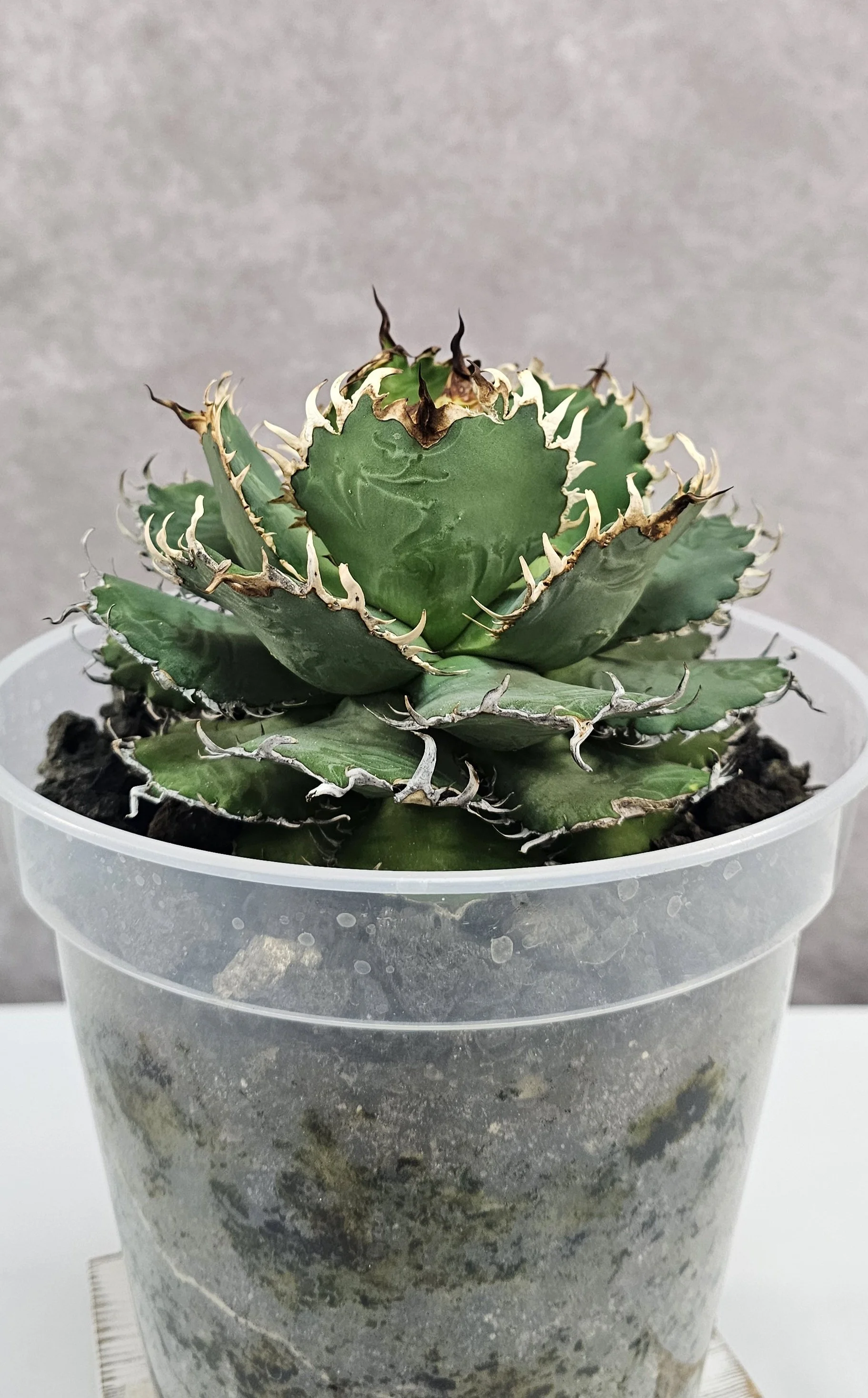 Image 4 of 6
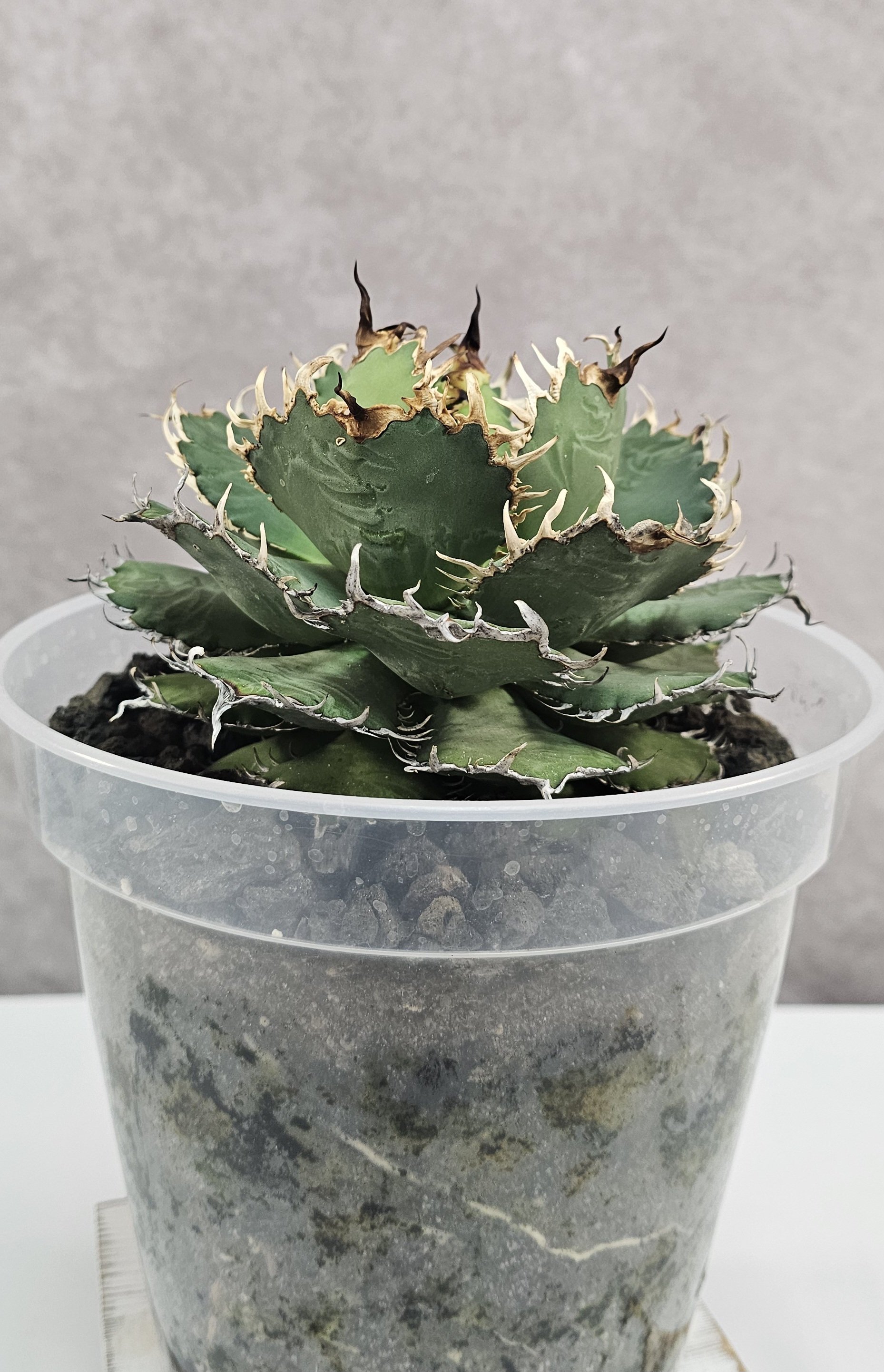 Image 5 of 6
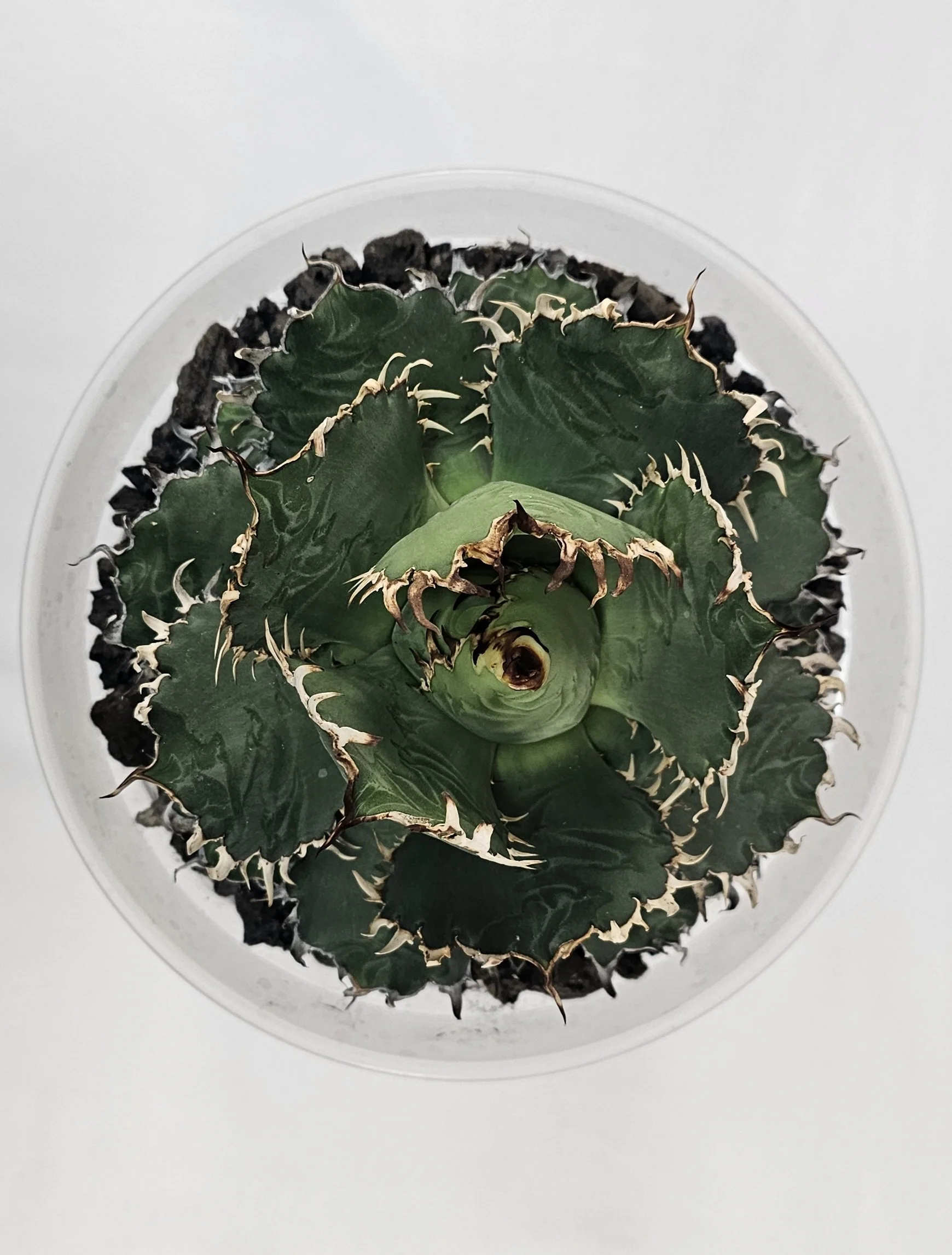 Image 6 of 6
🌞 Light
Full sun is essential — this agave develops its compact rosette, powdery white color, and bold leaf contrast only in strong, direct light.
Indoors: place near a south-facing window or use high-intensity grow lights.
Outdoors: ideal in open, unshaded positions with good airflow.
Partial shade can be tolerated but will produce longer, greener leaves.
💧 Water
Very drought-tolerant once established.
During active growth (spring to early fall):
Water deeply but infrequently — allow soil to dry completely before watering again.
In hot weather, about once every 10–14 days is sufficient.
During winter or cool dormancy:
Water lightly every 4–6 weeks or not at all if kept cool and dry.
Overwatering causes leaf yellowing, rot, or softening — dryness is safer.
🌵 Soil
Requires excellent drainage — it naturally grows on limestone cliffs and rocky slopes.
Ideal soil mix:
60–70% pumice, lava rock, or coarse sand
30–40% cactus or succulent mix
You can add crushed limestone or dolomite for an alkaline boost.
Avoid heavy organic or peat-based soils.
🌡️ Temperature
Prefers warm, arid conditions (24–35°C / 75–95°F).
Can tolerate brief cold to –2°C (28°F) if perfectly dry.
Protect from frost, prolonged damp cold, or freezing wind — they scar the leaves easily.
Overwinter indoors in a bright, dry spot if your area freezes.
🍃 Fertilization
Feed lightly during active growth (spring–summer):
Use a diluted cactus or succulent fertilizer (¼ strength) once monthly.
Avoid high-nitrogen fertilizers — they cause weak, overly green growth.
✂️ Maintenance
Remove old, dried lower leaves only when they detach easily.
Avoid touching the leaf surface too much — it has a natural powdery “bloom” that protects it from sun and gives the white coloration.
Handle with care: spines are sharp and hooked.
🌱 Propagation
Propagated mainly by offsets (pups) — though FO-76 can be slow to produce them.
Use clean tools, allow offsets to dry for 2–3 days before potting.
Root in a warm, bright environment with minimal water until growth resumes.
🪴 Container Tips
Use clay or unglazed pots to encourage evaporation and airflow.
A shallow, wide pot works well to show off the rosette.
Repot only every 3–5 years, as FO-76 prefers being slightly root-bound.