

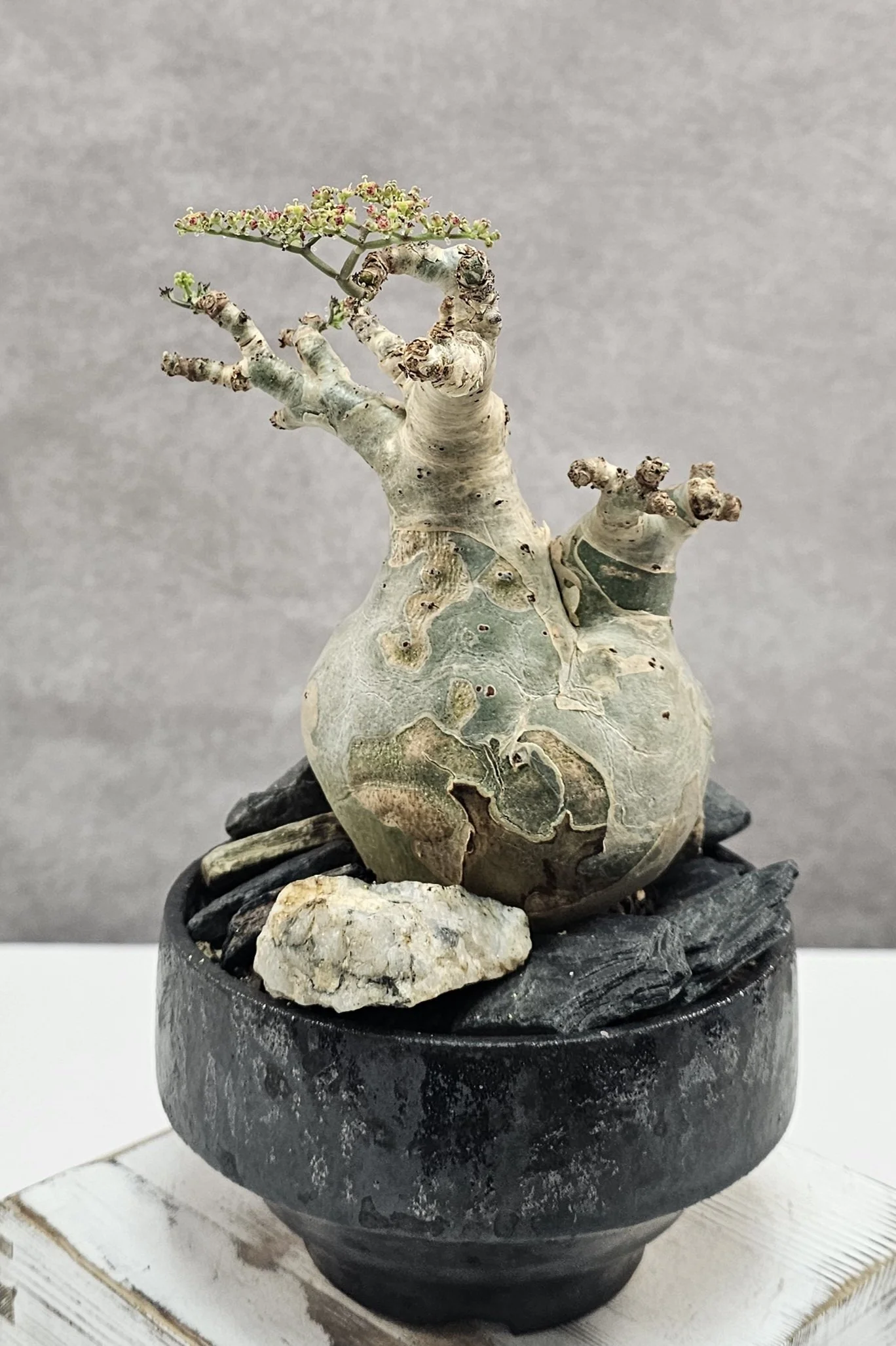
 Image 1 of 5
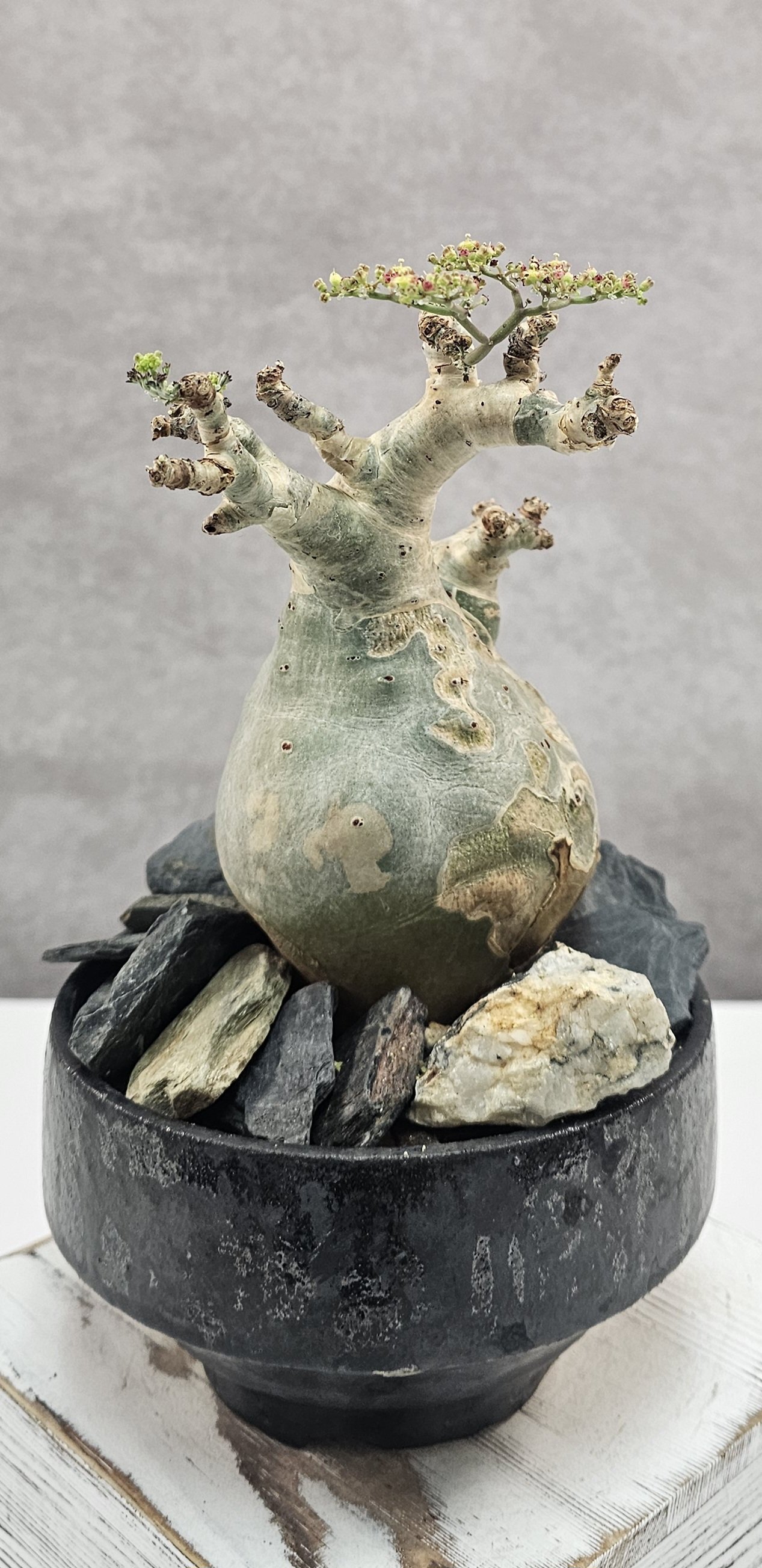 Image 2 of 5
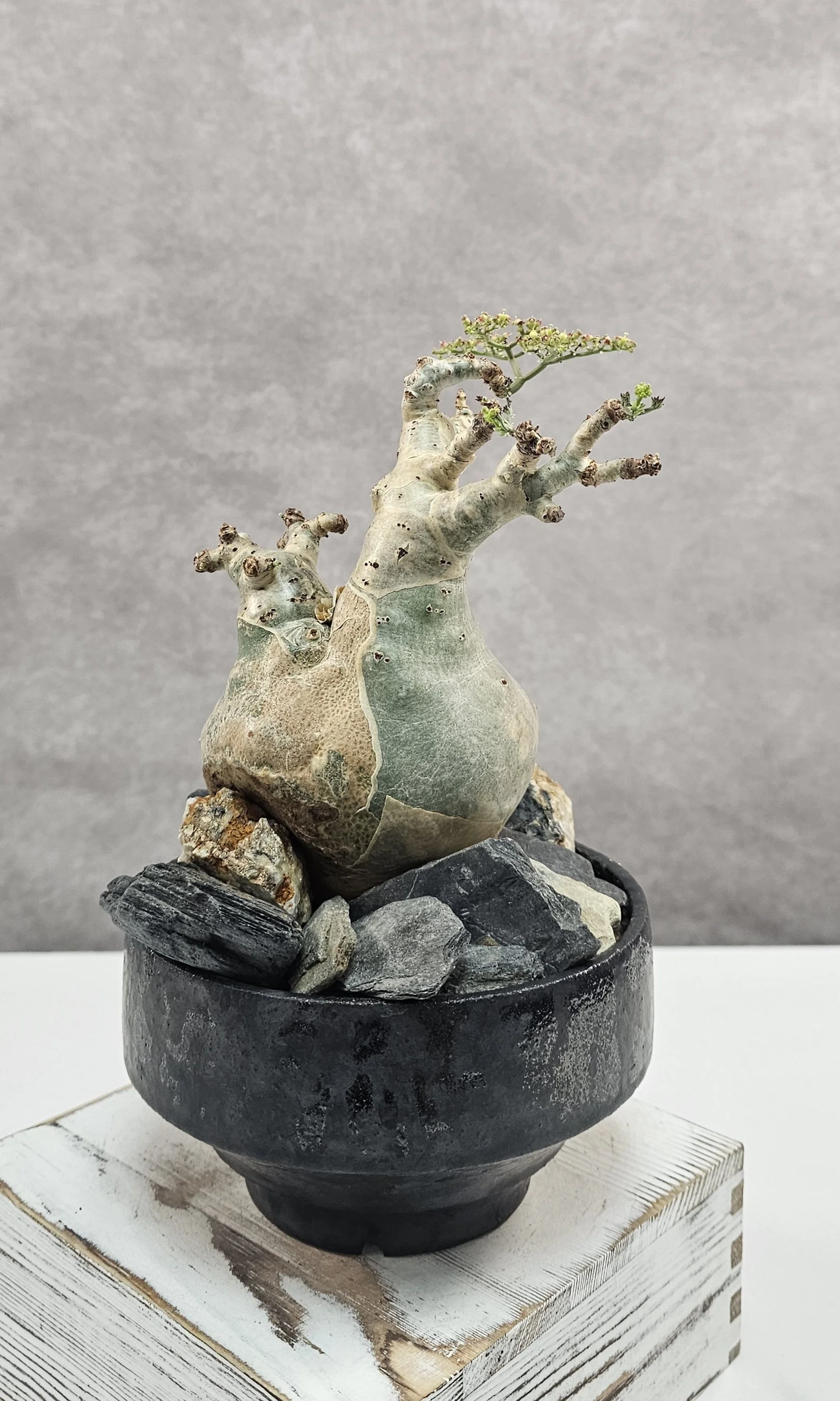 Image 3 of 5
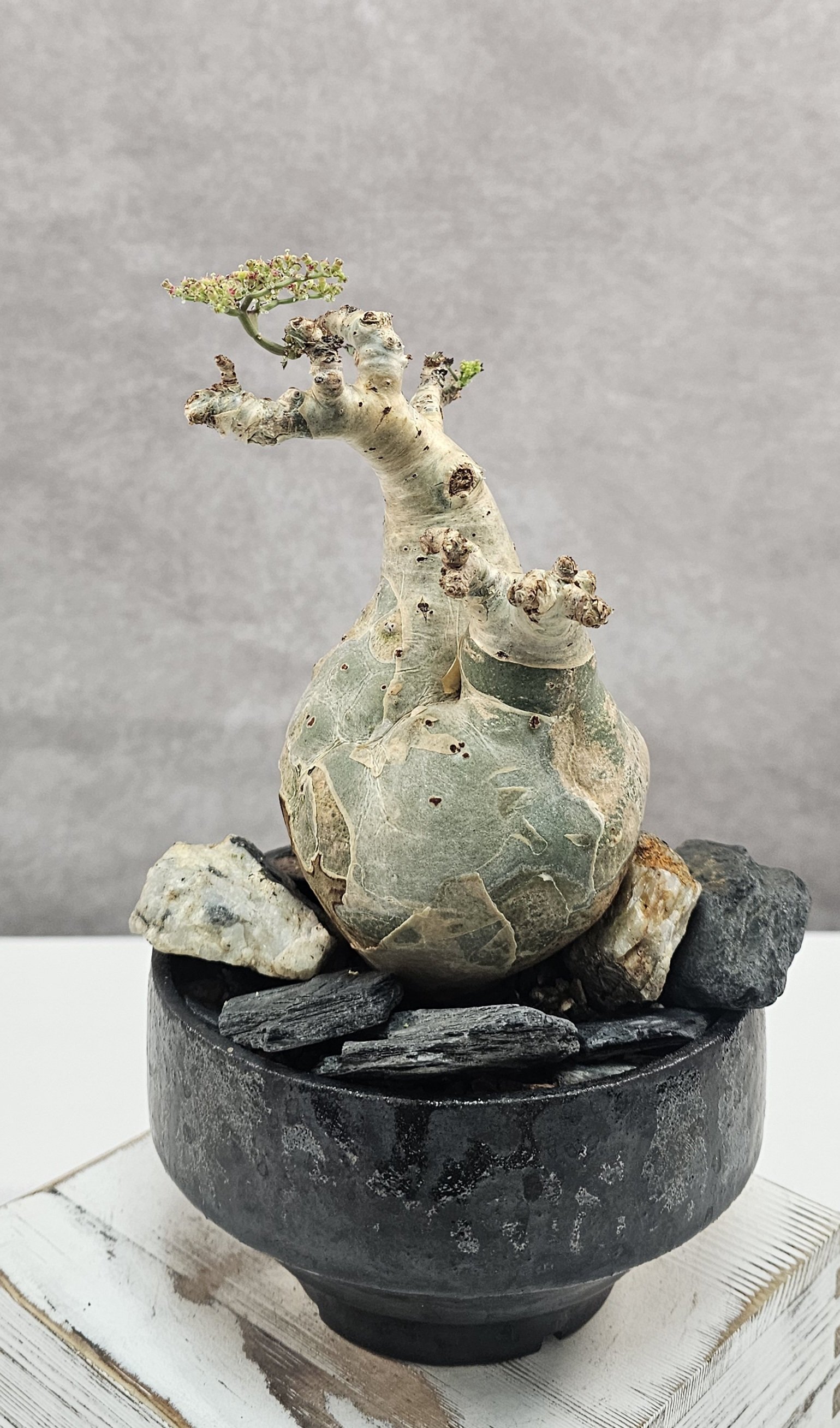 Image 4 of 5
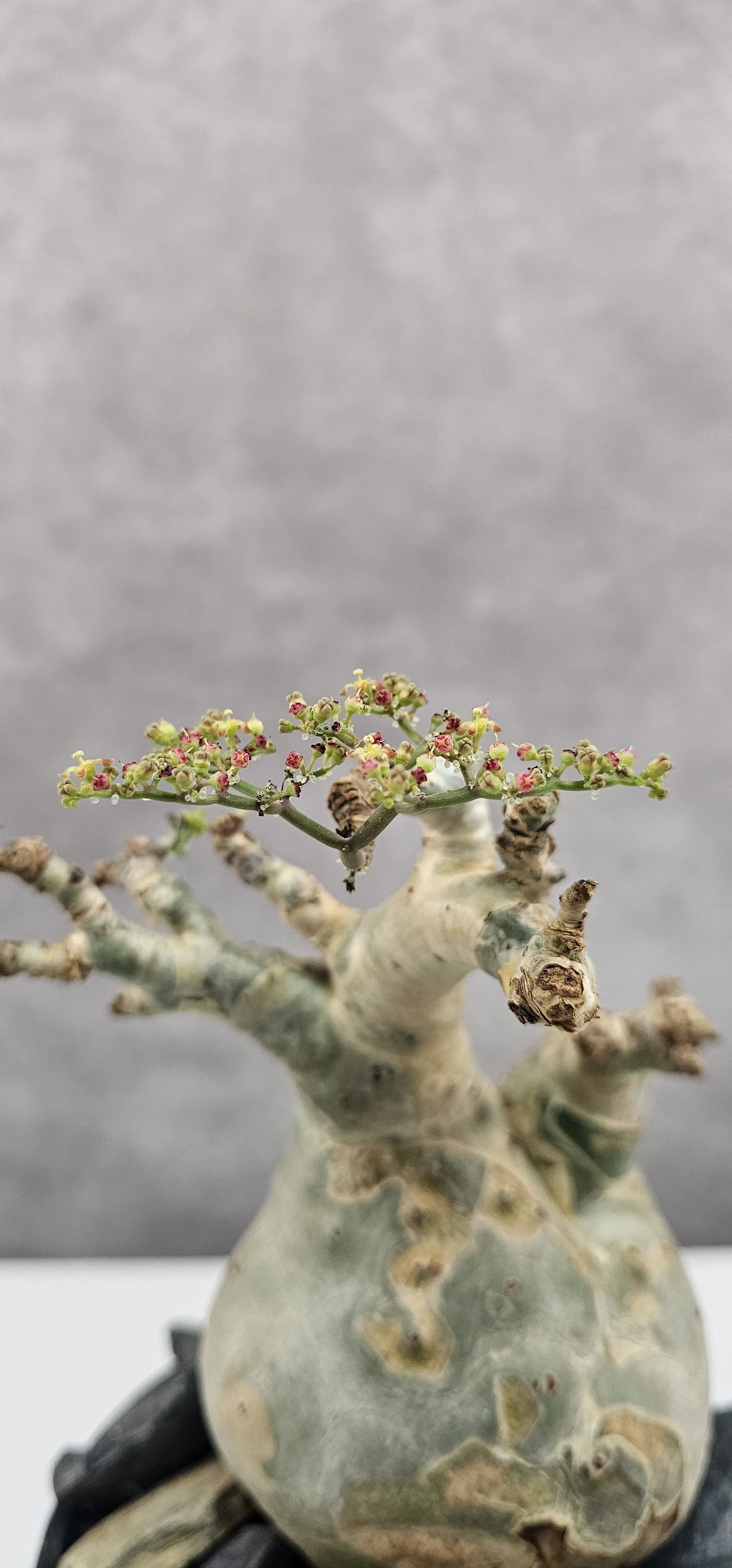 Image 5 of 5
🌞 Light
Prefers bright, indirect sunlight or filtered light.
Avoid harsh midday sun, which can scorch new leaves.
Indoors: place near a south or east-facing window. Outdoors: light shade or morning sun is ideal.
💧 Watering
Active growth (spring–summer): Water when the top inch of soil is dry. The caudex should never sit in wet soil.
Dormancy (fall–winter): After the vines and leaves die back, stop watering completely. Only mist or lightly water once every 4–6 weeks to prevent the caudex from shriveling.
Always use a pot with excellent drainage — overwatering is the main cause of failure.
🌵 Soil
Needs very well-draining, gritty soil — similar to a cactus or caudiciform mix.
Recommended blend:
60–70% pumice, perlite, or coarse sand
30–40% light organic matter (cactus mix or loam)
Avoid moisture-retentive soil like peat or coco coir.
🌡️ Temperature
Ideal temperature: 75–90°F (24–32°C) during growth.
Do not expose to temperatures below 55°F (13°C) — it is not frost-tolerant.
Likes warm, slightly dry air with good ventilation.
🍃 Fertilization
Feed once a month during active growth with a diluted, balanced fertilizer (e.g., 1/4 strength).
Do not fertilize while dormant.
🪴 Container & Repotting
Use a shallow, porous pot (clay or terracotta) with large drainage holes.
Repot only when necessary — every 2–3 years, before new growth starts in spring.
Keep the caudex slightly above soil level to prevent rot and display its shape.
✂️ Maintenance
Let vines climb or trail naturally; prune dead growth at the start of dormancy.
Avoid disturbing the caudex — it’s slow-growing and easily damaged.
🌱 Propagation
Propagated from fresh seeds; germination requires warmth (80–85°F / 27–29°C) and steady moisture.
Caudex division is not recommended — each plant forms from a single tuber.