

 Image 1 of 1
🌍 Origin & Habit
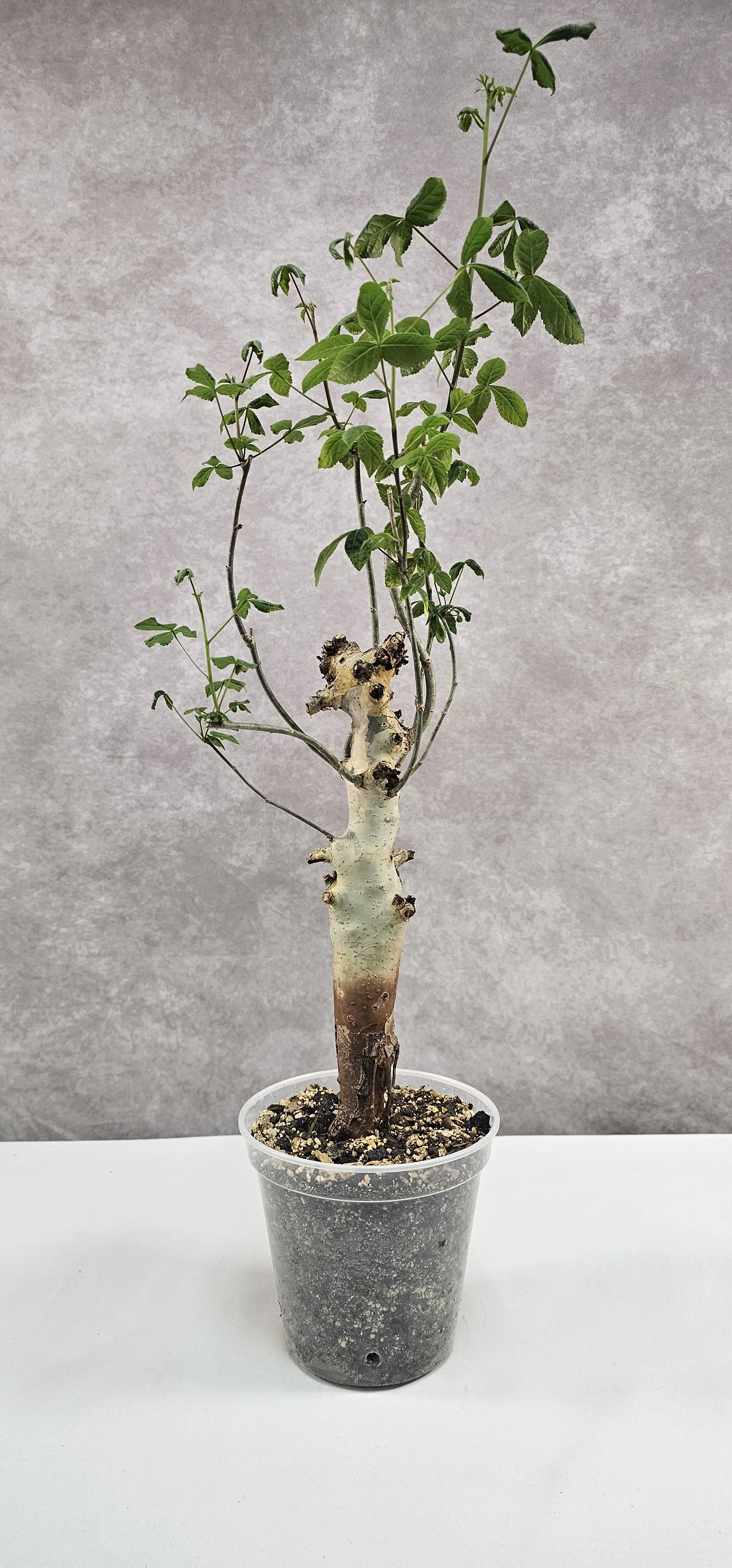
Commiphora kataf from Somalia is a semi-deciduous caudiciform shrub or small tree native to rocky, arid habitats. It forms a thick, water-storing trunk with peeling papery bark in pale cream, gray, or copper tones. Its branches are often gnarled or zigzag-shaped, with small, trifoliate leaves that appear briefly during the growing season.
This species is closely related to frankincense and myrrh trees (Burseraceae family), producing aromatic resins when cut.
☀️ Light Requirements
Full sun to bright light is essential.
Outdoors, provide 6–10 hours of direct sunlight daily.
Indoors, use a south-facing window or strong grow light (≥ 10,000 lux).
Insufficient light leads to weak, elongated growth and dull bark color.
🌡️ Temperature & Climate
Optimal range: 75–95°F (24–35°C).
Can tolerate up to 110°F (43°C) if well-rooted and ventilated.
Minimum temperature: 45°F (7°C); avoid prolonged cold or frost.
During dormancy (cool, dry months), keep it above 50°F (10°C).
💧 Watering
Active growing season (warm months):
Water deeply but infrequently.
Allow the soil to dry completely between waterings.
Typical rhythm: every 10–14 days in heat, depending on pot size.
Dormant season (cool or leafless period):
Reduce watering drastically or stop entirely until new growth appears.
Too much moisture when dormant can cause root or trunk rot.
The Somalia form is especially sensitive to overwatering.
🌱 Soil Mix
Requires a fast-draining, gritty mix.
Example blend:
50–60% coarse pumice or perlite
30% lava rock or coarse sand
10–20% organic matter (e.g., cactus compost or fine bark)
Avoid peat-heavy soils — they retain too much water.
🍽️ Fertilizing
Feed lightly during the active growing season only.
Use a diluted, low-nitrogen fertilizer (e.g., ¼ strength cactus formula).
Overfeeding leads to leggy, weak growth and poor caudex shape.
🌿 Pruning & Shaping
Commiphora kataf can be pruned to enhance its sculptural form.
Remove leggy or crossing branches in spring before growth begins.
The bark scars beautifully, often healing into attractive textures.
🪴 Repotting
Repot every 2–3 years in late spring.
Handle roots gently; avoid removing too much of the fine root system.
Always use a well-ventilated pot with large drainage holes.
Clay or terracotta pots are preferred for their breathability.
🌸 Seasonal Cycle
Spring–summer: Active growth; leaves appear, sometimes followed by small, inconspicuous flowers.
Late summer–autumn: Leaves begin to yellow and drop as the plant enters dormancy.
Winter: Rest period — keep dry and warm.
⚠️ Common Issues
Overwatering: The most frequent cause of death — trunk or root rot.
Cold exposure: Causes defoliation and stem dieback.
Low light: Leads to elongated, weak stems and faded bark.
Pests: Occasionally affected by mealybugs or spider mites; treat with neem oil or insecticidal soap.
🌸 Bonus Tip
The peeling bark is a hallmark of healthy Commiphora kataf. If bark shedding slows or stops, it often signals insufficient light or overwatering.